

New device flushing process
Warm reminder
1. As the machine and filter may have a slight odor when leaving the factory, please complete the new device flushing process carefully.
2. Do not plug or unplug the water tank when the pump is working, or it may damage the machine.
3. Do not plug or unplug the filter without necessity. Improper operation may cause water leakage or damage to the machine.
4. Every time the machine prompts to replace the raw water during flushing, pour out the remaining waste water in the raw water tank and refill it.
5. You can use the machine normally after the process (the airing time and flushing times can be increased according to the actual situation).
New device hot water debugging
When using hot water from the machine for the first time, it will adjust the outlet water temperature and heating program according to the ambient temperature and inlet water temperature. After flushing the machine and when it is filled with water again, continuously draw 98℃ water for 1 - 2 minutes, 85℃ water for 1 - 2 minutes, and keep drawing hot water until reaching 45℃ for 1 - 2 minutes to let the machine adapt to the current ambient temperature.
*Note: Steam may appear during the process. Please pay attention to safety.
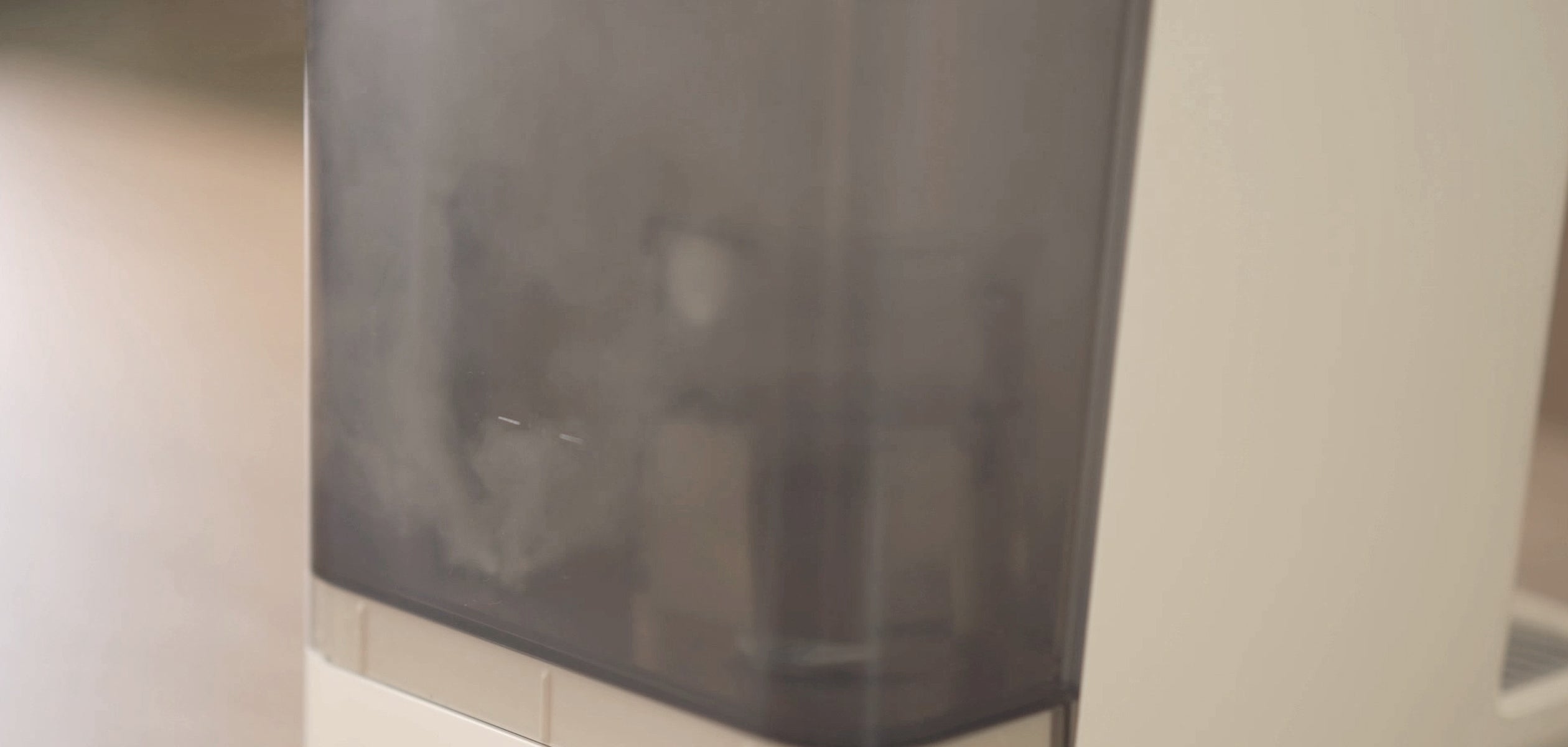
"White powder/turbidity" appears in the new machine's water tank.
First, please don't worry. The "white powder" or turbidity is actually an illusion caused by numerous dense air bubbles dissolved in water. Since Bewinch uses RO reverse osmosis technology, it squeezes water molecules through the RO membrane by physical pressurization, with a filtration precision of 0.1 nanometers. The booster pump highly compresses the air in the filter and water during operation, creating many dense bubbles. This is a normal physical phenomenon, which doesn't affect water quality, so you can drink it safely. It will significantly reduce after multiple flushes.
*Note: When getting purified water for the first time, white froth may also appear in the container. Like the white powder, it consists of fine bubbles and will disappear after standing.
Daily use
Place the machine
The water purifier should be placed on a stable, firm and dry countertop. Don't put the whole machine in direct sunlight or areas with heavy fumes, as it may affect the appearance cleanliness.
Move the machine
When moving the machine, first ensure it's not making water. Remove the water pitcher, unplug the power, then move it. After moving, replace the water pitcher.
Water intake operation
Auxiliary functions
Child lock mode: Long-press the "60mL" volume adjustment key for 5 seconds. Release it after hearing a "beep". The child lock icon lights up, "LOC" shows at the raw water TDS area, and the child lock mode activates. Water intake is disabled, but water in the pitcher can be used. Long-press the "60mL" key again for 5 seconds. Release after the "beep" to turn off the child lock and resume normal water intake.
Raw water replacement
Move the water tank
Don't move the water tank while the machine is making water, or it'll cause air trapping and malfunction.
Note: It's recommended to move the tank for water replacement after the machine finishes making water or is powered off.
Water in the tank
1. Never pour hot water into the tank, or it will deform and the machine won't work properly.
2. Avoid pouring raw water other than tap water and purified water, like sewage and drinks, into the tank, or it'll affect the filter's lifespan.
Note: Theoretically, use municipal tap water at 5℃ - 35℃ and 0.2 - 0.4 zpa pressure.
Filter replacement
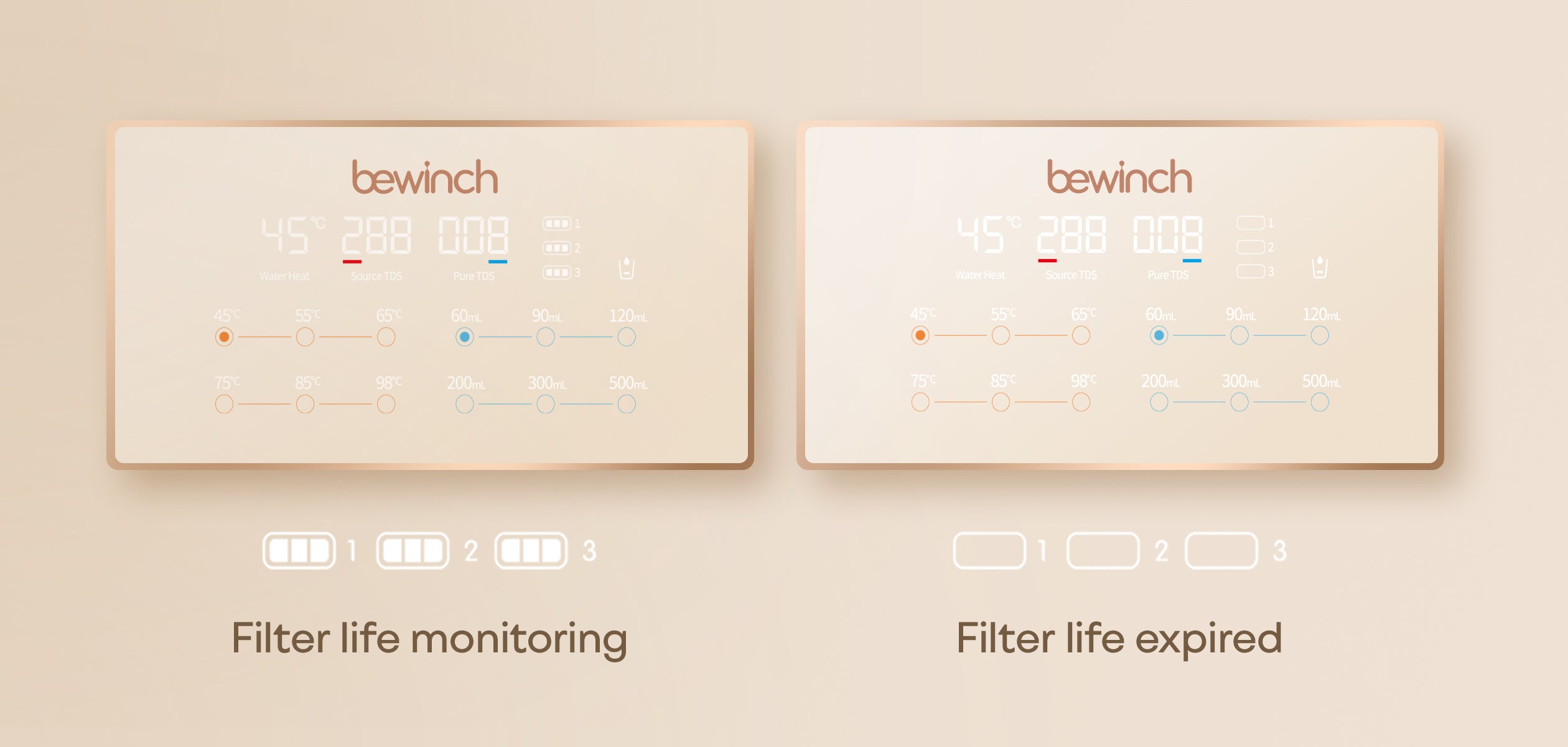
The machine will continuously beep during each water - taking process, and the filter life indicator will show a blank space to remind you to replace the filter.
Filter replacement method:
*Note:
1. Replace the filter in time to avoid damage to the machine's core components.
2. If the filter indicator doesn't change 30 seconds after screwing in the filter, remove and re - screw it in until it resets automatically.
3. Don't plug or unplug the filter while the machine is making water to prevent air entrapment and malfunction.
4. After replacing the filter, drain water three times to fully moisten it.
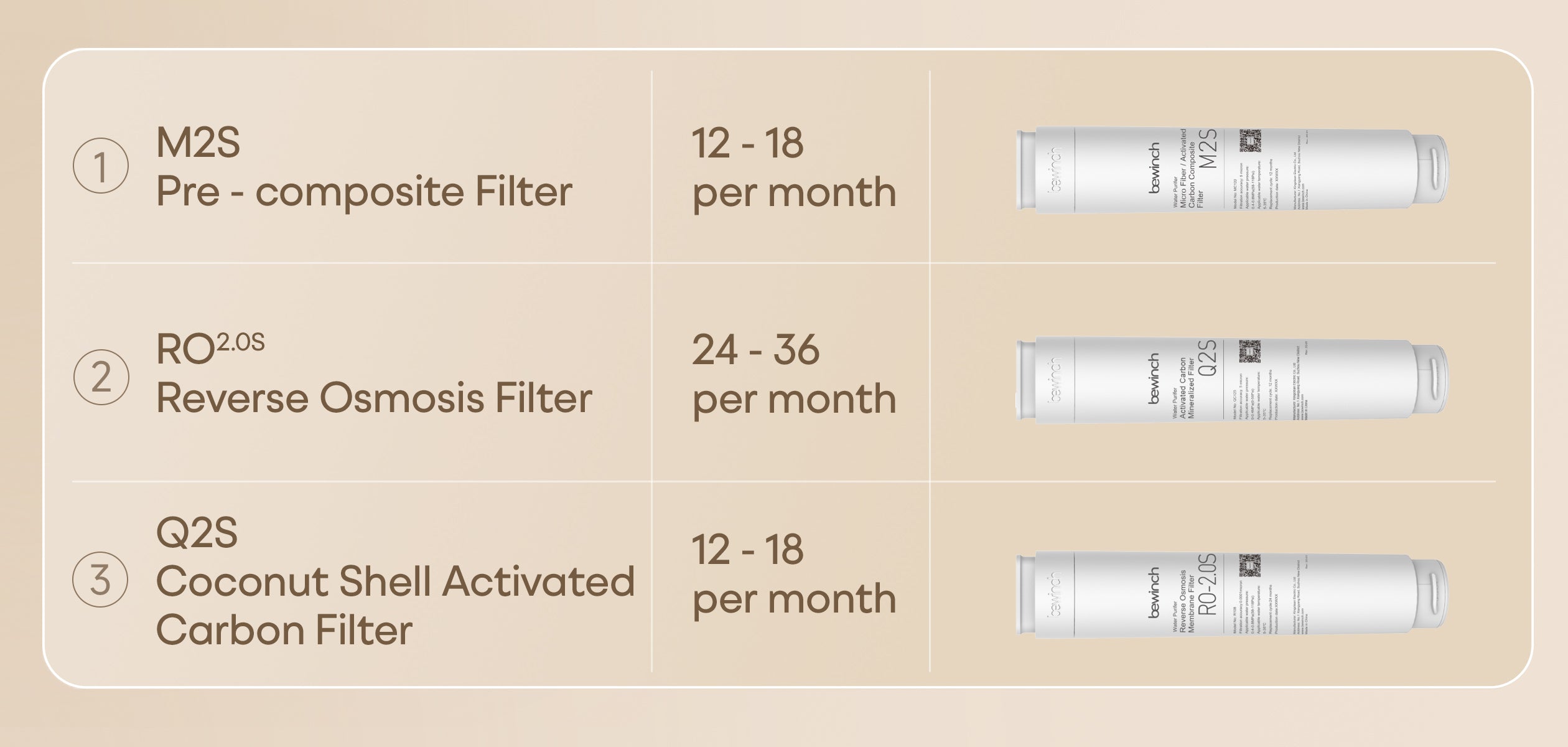
Filter life of each stage for G3Pro Hill:
Filter lifespan isn't fixed. It depends on your home's water quality, water usage, working pressure, inlet water temperature, power - on time, etc. The machine panel has a smart filter replacement prompt. It can monitor the remaining filter life and alert you when replacement is needed.
*Note: Filter life indicators 1, 2, and 3 represent the service lives of the 1st, 2nd, and 3rd stage filters respectively. Each indicator has 3 bars. When a bar is blank and starts flashing, it's time to replace the corresponding filter.
Descaling module
Machine cleaning
Raw water tank cleaning

Whole-machine descaling
*Notes:
1. As tap water is directly added to the machine, scale may accumulate in the raw water tank and filter element after long-term use. Excessive scale may lead to filter element clogging, shortened service life, and the machine not producing water.
2. Do not add hot water directly to the raw water tank during the descaling process, as it may cause deformation and damage to the raw water tank!
3. For areas with poor raw water quality, it is recommended to descale regularly (about every 2 - 3 months). The descaling cycle can be adjusted according to the local raw water quality!
Wastewater-related
Why does the machine produce some wastewater?
Reverse osmosis technology is essentially a water quality separation method. The precision of the reverse osmosis filter element is 0.0001 microns, and theoretically only water molecules can pass through. At the moment when the RO membrane separates calcium, magnesium and other ions from water, these ions will quickly crystallize and attach to the RO membrane surface, clogging the filter element. Our vortex convection self-cleaning technology flushes away the calcium and magnesium ions attached to the filter element surface to protect its lifespan. Therefore, all RO reverse osmosis and higher models produce "wastewater".
Is the lower the ratio of purified water to wastewater, the better?
No. Blindly increasing the ratio may damage the filter element to some extent. Bewinch sets a 3:1 golden ratio. On one hand, it ensures a high volume of purified water; on the other hand, it protects the filter element. So, the service life of our secondary filter element can reach 2 - 3 years.
Will recycling wastewater into the water tank affect water quality?
No. Firstly, we're equipped with a vortex convection flushing program. It ensures the filter material lasts longer while the machine operates normally, guaranteeing water quality safety by protecting the filter element. Additionally, our machine has a purified water jug where filtered pure water is stored in advance, ensuring the water you drink is safe and pollution - free.
Is wastewater dirty water?
The "wastewater" here isn't truly "waste". It's "concentrated water" filtered through PP cotton and activated carbon. Apart from higher salt content (hence higher TDS), its turbidity, color, residual chlorine, odor, taste, organic matter, suspended solids, colloids, COD, TOC and SDI are all lower than tap water. In theory, it's cleaner than tap water (but undrinkable). When the machine prompts to change the raw water, empty the water tank or refill it. This concentrated water can be used for mopping, flushing toilets, watering plants and doing laundry in daily life, so it won't be wasted.